Von Hayek taught that conservative principles are the tested product of an evolutionary social process. He taught that (libertarian) policies which support this trial-and-error progress serve society best. His teachings offer hope and direction to conservatives fearful that "dependency politics" are now permanently entrenched. In the end, truth can be counted on to prevail.
Strauss taught concern with the fundamental alternative: That western culture is the product of centuries of cultivating human nature and that America is exceptional because of the unusual alignment of history and tradition with libertarian principles (and the unlikely marriage of Virtue and Democracy). The classics, according to Strauss, taught that the best regimes came into being only by chance and that history is cyclical not linear. These teachings animate conservative fears that we are close to a tipping point where the culture of too many hyphenated Americans undoes that exceptionalism.
This blog has argued: "to believe in Freedom is to see in American history ample evidence of how malleable and ever-changing "culture" can be and how people, left to their own devices, lift themselves up." It is helpful to remember that Political Conservatism was a minority view for much of the twentieth century. In the end, what Strauss suggested -- and Reagan demonstrated -- is that a Conservatism that that confidently appeals to individual dignity can never be permanently suppressed.
Showing posts with label Von Hayek. Show all posts
Showing posts with label Von Hayek. Show all posts
Monday, November 12, 2012


Thursday, November 3, 2011
Cultural Capital
David Brooks, I suppose, fancies himself conservative for writing things like:
Structurally, these arguments take some factor which is correlated to cultural capital (e.g.: home ownership, college education), latch on to any tenuous rationale arguing the relationship is causal (People take better care of things they own! College graduates have wider social networks!), push expensive government programs with inevitable unintended consequences that, equally inevitably, fail because wishful thinking cannot turn correlation into causation.
Von Hayek taught that the natural, evolutionary, processes of free societies tend to increase cultural capital. More traditional conservative teaching would accentuate the role played by community. In either case: A government which governs least expands opportunity best.
it is easier to talk about the inequality of stock options than it is to talk about inequalities of family structure, child rearing patterns and educational attainment. But the fact is... it’s not nearly as big a problem as the tens of millions of Americans who have dropped out of high school or college. It’s not nearly as big a problem as the 40 percent of children who are born out of wedlock. It’s not nearly as big a problem as the nation’s stagnant human capital, its stagnant social mobility and the disorganized social fabric for the bottom 50 percent... If your goal is to expand opportunity, then you have a much bigger and different agenda.
He is certainly correct up to a point: cultural capital matters -- big government policies that disregard that are doomed to fail. He, and others, however, imagine that there are other, smarter, big government policies which can, taking cultural capital into account, succeed.Structurally, these arguments take some factor which is correlated to cultural capital (e.g.: home ownership, college education), latch on to any tenuous rationale arguing the relationship is causal (People take better care of things they own! College graduates have wider social networks!), push expensive government programs with inevitable unintended consequences that, equally inevitably, fail because wishful thinking cannot turn correlation into causation.
Von Hayek taught that the natural, evolutionary, processes of free societies tend to increase cultural capital. More traditional conservative teaching would accentuate the role played by community. In either case: A government which governs least expands opportunity best.
Thursday, September 2, 2010
Politics And Culture
In David Brooks' latest column, he observes the pointed disagreement between the German and American Governments in how to approach the economic crisis. American leaders argued... governments should borrow billions to stimulate growth. German leaders argued... what was needed was not more debt, but measures to balance budgets and restore confidence. He notes that the early returns seem to favor the Germans. Recycling Von Hayek, he believes this is because
What seems evident to me -- and perhaps implicit in Brooks' argument -- is that the divisiveness in American politics is a reflection of the divided-ness in American society. We lack the ethnic ties that bind other societies, and -- as illustrated by the WTC Mosque debate -- we lack any unifying conception of American Ideals/Values.
One the other hand, it is not clear that the cause of institutional irresponsibility is political divisiveness. For example, in Von Hayek's teaching, the values the "parenting model" calls for instilling, are the context-specific product of an evolutionary trial and error process. In other words, much clearer with-in a consensus-based context than a disruptively innovative one.
The ultimate argument contra-Brooks is Japan, consensus-based and not particularly politically divisive, in whose economic footsteps, America is now following. In contrasting Japan and Germany, what sticks out is the resistance the Japanese have towards accepting responsibility for WWII war crimes against the willingness of Germans to do so. It should not be surprising that being a society which generally accepts responsibility is related to having a government that acts responsibly. What is reflexively somewhat more surprising is what this indicates of American society.
The economy can’t be played like a piano — press a fiscal key here and the right job creation notes come out over there. Instead, economic management is more like parenting. If you instill good values and create a secure climate then, through some mysterious process you will never understand, things will probably end well.


The crucial issue is getting the fundamentals right. The Germans are doing better because during the past decade, they took care of their fundamentals and the Americans didn’t.Nations rise and fall on the intertwined strength of their cultures and governing institutions... German governing institutions have functioned reasonably well... The U.S. has a phenomenally creative culture, but right now it’s an institutional weakling... [where] political division frustrates long-range thinking.
What seems evident to me -- and perhaps implicit in Brooks' argument -- is that the divisiveness in American politics is a reflection of the divided-ness in American society. We lack the ethnic ties that bind other societies, and -- as illustrated by the WTC Mosque debate -- we lack any unifying conception of American Ideals/Values.
One the other hand, it is not clear that the cause of institutional irresponsibility is political divisiveness. For example, in Von Hayek's teaching, the values the "parenting model" calls for instilling, are the context-specific product of an evolutionary trial and error process. In other words, much clearer with-in a consensus-based context than a disruptively innovative one.
The ultimate argument contra-Brooks is Japan, consensus-based and not particularly politically divisive, in whose economic footsteps, America is now following. In contrasting Japan and Germany, what sticks out is the resistance the Japanese have towards accepting responsibility for WWII war crimes against the willingness of Germans to do so. It should not be surprising that being a society which generally accepts responsibility is related to having a government that acts responsibly. What is reflexively somewhat more surprising is what this indicates of American society.
Tuesday, August 10, 2010
Rational Basis
Unsurprisingly, the district court judge found no rational basis behind denying gay marriages state sanction.
Douthat, acknowledges the weakness of the general conservative apologia in attempting his own, which, when stripped of pretension, amounts to little.
Von Hayek would suggest an indirect defense. He taught it was wholly rational to respect our cultural inheritance -- which he viewed as the product of a complicated evolutionary process -- as such. In his frame, to argue that a, for example, commonly-held traditional moral view is without rational basis, one has to assert deep understanding of the complicated interconnections binding us together as a society, and therefore the consequences that flow from upholding or rejecting that view. No person can rationally make that assertion.
That said, Judge Walker was not simply disregarding tradition. After all, our founding fathers envisioned a politics in which reason displaced passion.
Douthat, acknowledges the weakness of the general conservative apologia in attempting his own, which, when stripped of pretension, amounts to little.
Von Hayek would suggest an indirect defense. He taught it was wholly rational to respect our cultural inheritance -- which he viewed as the product of a complicated evolutionary process -- as such. In his frame, to argue that a, for example, commonly-held traditional moral view is without rational basis, one has to assert deep understanding of the complicated interconnections binding us together as a society, and therefore the consequences that flow from upholding or rejecting that view. No person can rationally make that assertion.
That said, Judge Walker was not simply disregarding tradition. After all, our founding fathers envisioned a politics in which reason displaced passion.
Sunday, January 3, 2010
The Ladies and the Tiger
Tiger "mistress", Jaimee Grubbs is not without a conscience. In a conversation with extra TV, she "couldn't describe how remorseful" she was to have hurt Elin the children. None-the-less, she does not feel all that bad as, she says, "If it wasn't me, it was going to be other girls."
Traditional teachers advanced standards of behavior -- classical virtue, religious righteousness -- to be adhered to for their own sake. Von Hayek observes that this traditionally morality is everywhere being replaced by "social conscience" -- being guided by awareness of the effect of our actions on others.
Von Hayek critiques this new thinking on its own terms. He argues that traditional moral rules are, themselves, social phenomenon -- evolving societal understandings, required as people cannot possibly fully understand the complex consequences flowing from their own actions. To Von Hayek, true social conscience demands respect for traditional rules.
Pragmatically -- as illustrated by the Prisoner's Dilemma -- any consequence-driven social morality seems unlikely to be ultimately upheld. In the end, whatever we do, other people will pollute, deal arms, sell predatory mortgages, mislead on their mortgage applications, separate fools and their money, sleep with married billionaires, etc, so why should we abstain? The Obama Administration has, in fact, played to this lesser angel, in the stimulus debate, suggesting critics opt out.
Tiger, of course, has no similar excuse for his choices. He has, thankfully, not yet attempted to justify them. That said, it is hard for us to simply condemn him, knowing that few men could withstand the temptations he faced. By some measure, his sin, so to speak, was not being a saint. Or, perhaps, his true mistake, given his place in life, was aspiring to-, thinking he could-, be a father and a husband.
Traditional teachers advanced standards of behavior -- classical virtue, religious righteousness -- to be adhered to for their own sake. Von Hayek observes that this traditionally morality is everywhere being replaced by "social conscience" -- being guided by awareness of the effect of our actions on others.
Von Hayek critiques this new thinking on its own terms. He argues that traditional moral rules are, themselves, social phenomenon -- evolving societal understandings, required as people cannot possibly fully understand the complex consequences flowing from their own actions. To Von Hayek, true social conscience demands respect for traditional rules.
Pragmatically -- as illustrated by the Prisoner's Dilemma -- any consequence-driven social morality seems unlikely to be ultimately upheld. In the end, whatever we do, other people will pollute, deal arms, sell predatory mortgages, mislead on their mortgage applications, separate fools and their money, sleep with married billionaires, etc, so why should we abstain? The Obama Administration has, in fact, played to this lesser angel, in the stimulus debate, suggesting critics opt out.
Tiger, of course, has no similar excuse for his choices. He has, thankfully, not yet attempted to justify them. That said, it is hard for us to simply condemn him, knowing that few men could withstand the temptations he faced. By some measure, his sin, so to speak, was not being a saint. Or, perhaps, his true mistake, given his place in life, was aspiring to-, thinking he could-, be a father and a husband.
Sunday, November 8, 2009
Monoculture
One recurring trope on this blog is Von Hayek's teaching that government ought to garden more and sculpt less.
I was watching The Botany of Desire on PBS, based on the book by Michael Pollan. The film argues against monoculture. According to the film, people want, for example, their french fries, to always taste in a similar manner, what Pollan labels "monoculture-on-the-plate". The film faults free markets for too efficiently meeting this desire via "monoculture-on-the-farm". In a state of nature, crops evolve immunities to pests. In monoculture agriculture, where biological diversity, and so natural adaptation, is suppressed, pesticide is required in increasing quantity. This is expensive, creating demand for genetically engineered crops. As pests, unrestricted by monoculture, continue to adapt, a little genetic engineering creates the need for ever more genetic engineering. All to replace, but not really improve, a function that nature more respected well serves.
It is worth noting that diners tend to choose diversity-on-the-plate. The closer the food people eat is to the farm, the greater the economic pressure for diversity-on-the-farm. The economic pressure toward monoculture stems, in part, from consumer preference for the bounty of technology and, in part, from monoculture in the markets.
The analogue between all this and economic/financial-services regulation is self-evident, if likely missed by folks like Pollan given that, within our politics, evolution and free markets are placed in opposing corners. Von Hayek teaches that Darwin actually liberally applied ideas from Smith. Conceptually and historically, Von Hayek would seem right. The competing political alignment points to the limit of his otherwise brilliant work.
I was watching The Botany of Desire on PBS, based on the book by Michael Pollan. The film argues against monoculture. According to the film, people want, for example, their french fries, to always taste in a similar manner, what Pollan labels "monoculture-on-the-plate". The film faults free markets for too efficiently meeting this desire via "monoculture-on-the-farm". In a state of nature, crops evolve immunities to pests. In monoculture agriculture, where biological diversity, and so natural adaptation, is suppressed, pesticide is required in increasing quantity. This is expensive, creating demand for genetically engineered crops. As pests, unrestricted by monoculture, continue to adapt, a little genetic engineering creates the need for ever more genetic engineering. All to replace, but not really improve, a function that nature more respected well serves.
It is worth noting that diners tend to choose diversity-on-the-plate. The closer the food people eat is to the farm, the greater the economic pressure for diversity-on-the-farm. The economic pressure toward monoculture stems, in part, from consumer preference for the bounty of technology and, in part, from monoculture in the markets.
The analogue between all this and economic/financial-services regulation is self-evident, if likely missed by folks like Pollan given that, within our politics, evolution and free markets are placed in opposing corners. Von Hayek teaches that Darwin actually liberally applied ideas from Smith. Conceptually and historically, Von Hayek would seem right. The competing political alignment points to the limit of his otherwise brilliant work.
Sunday, September 20, 2009
Obama's America
There appears to be such a mountain of forensic evidence linking janitor Raymond Clark, III to the murder of medical student Annie Le, that authorities do not feel the need to lock down his motivation.
From the reporting it appears that achievement/class resentment was likely involved. The executive director of the American Association for Laboratory Animal Science has been quoted to the effect of: The gap in education levels shouldn't necessarily lead to tension if there is a culture of respect. The latent blaming-the-victim implication horrifies.
Von Hayek notes that envy, according to Mill the most evil of all passions, is sanctified in our society by the formula "social justice". What the successful once dismissed as envy on the part of the less successful is, in the view of the less successful -- or as we are obligated to see them: "less fortunate" -- righteous indignation in the face of gross injustice.
Even if we sympathize with the aspiration towards equality of opportunity and admire the charitable impulse, we must recognize that the equation of unfairness with injustice sits, precariously, on a slippery slope.
Overseen on a morning cross-town bus: suited father and pre-school daughter, perhaps 4 years old. Father and daughter are reviewing addition and subtraction on his fingers.
It is hardly fair that products of less invested parents will have to, one day, compete against that little girl. Just as it is hardly fair that people less naturally gifted have to, every day, compete against people more naturally gifted. Or that people with weak work ethic have to compete against those who seem to enjoy hard work.
A society in which parental investment, natural ability and hard work are more generally rewarded is one that will generally progress farther. A rising tide, in turn, lifts all ships. But try explaining that to Raymond Clark, III.
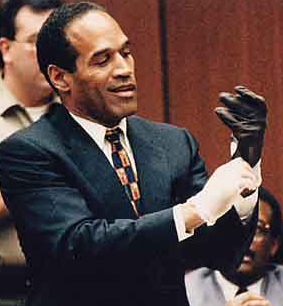
From the reporting it appears that achievement/class resentment was likely involved. The executive director of the American Association for Laboratory Animal Science has been quoted to the effect of: The gap in education levels shouldn't necessarily lead to tension if there is a culture of respect. The latent blaming-the-victim implication horrifies.
Von Hayek notes that envy, according to Mill the most evil of all passions, is sanctified in our society by the formula "social justice". What the successful once dismissed as envy on the part of the less successful is, in the view of the less successful -- or as we are obligated to see them: "less fortunate" -- righteous indignation in the face of gross injustice.
Even if we sympathize with the aspiration towards equality of opportunity and admire the charitable impulse, we must recognize that the equation of unfairness with injustice sits, precariously, on a slippery slope.
Overseen on a morning cross-town bus: suited father and pre-school daughter, perhaps 4 years old. Father and daughter are reviewing addition and subtraction on his fingers.
It is hardly fair that products of less invested parents will have to, one day, compete against that little girl. Just as it is hardly fair that people less naturally gifted have to, every day, compete against people more naturally gifted. Or that people with weak work ethic have to compete against those who seem to enjoy hard work.
A society in which parental investment, natural ability and hard work are more generally rewarded is one that will generally progress farther. A rising tide, in turn, lifts all ships. But try explaining that to Raymond Clark, III.
Wednesday, February 11, 2009
Obamanomics
I meant to comment on Obama's news conference Monday night. Drudge linked to a very good article that touches on some of the misgivings I had, but also, the reason I still feel more comfortable with Obama in charge then McCain.
Tangentially, a few years ago, I attending a financial risk management conference where, I think it was Emanuel Derman made a similar point about the financial models that have since proven inadequate.
One of the things that has reduced my confidence in the President is the manner in which he has held up this "create (or save) at least three million jobs" formulation. He has to know that there is no real way to measure that, which leads to the conclusion that it has more to do with politics then economics.
I think there is an essential, common sense, wisdom in Von Hayek's argument that the Government ought be more a gardener and less a sculptor. Strauss, I think, makes somewhat of a similar argument in On Tyranny.
Government-as-gardening is obviously more difficult then government-as-sculpting in that it requires greater understanding and patience, which is to say: wisdom.
I don't really agree with the author's prescription, which is why I snipped out First and Second, but there is some truth to Third. Obama, Monday night, described the vicious cycle which he argued can only, or best, be broken by Government. <metaphor-alert>But there is a timing game. If government shoots its wad and fails, there is no second chance. The author may well be correct at least to the extent that the public now might not be as responsive to a stimulus package as required, and it may make sense to save bullets in the gun.</metaphor-alert>
One doesn't have to dig too deeply to see plenty of instances of that dynamic -- private sector activity frozen awaiting Government decisions/intervention -- at play in out current crisis.
I think, perhaps, the most promising thing in the Presidential transition, was Obama's stated desire to avoid insular groupthink. For that reason, the most disappointing part of his initial press conference was when he derided those who question the efficacy of the New Deal.
This is, I think, the key point here. It seems that the Bush and Obama economic teams have identified problems -- eg: "credit is not flowing" -- and pursued government-as-sculptor policies intended to directly fix the problem. The presidents description need for government action to break the vicious cycle is a perfect illustration of that approach. More often then not the scope of the problem and the consequences of the policy surpass the policymakers grasp and so the policy proves ineffective.
The wiser course of action, again, would be governing-as-gardening. In this case, the focus would not be on directly fixing direct problems, but on identifying and targeting the reasons why the natural regenerative processes are missing.
To give one concrete example, previously discussed on this blog:
In a functioning cycle, creditors work with borrowers to renegotiate terms such that creditors get a more certain cash flow and borrowers get to keep their homes. That is not happening as much as it should in this cycle, largely because mortgages are pooled and tranched, renegotiation is contra the interests of the lower tranches. Pool managers may themselves own lower tranches or face lawsuit from lower-tranche-owners if they renegotiate. As this failure to renegotiate results in far more uncertain cash flows, the securities derived from those pools are far harder to accurately price. The pricing difficulty is, of course, at the heart of why these securities are "toxic" and, therefore, why credit is crunched.
A government-as-gardener might, then, pursue policies that unblock loan-modification that would lead to greater cash flow certainty. It could create conflict of interest laws and protect managers who renegotiate from the threat of lawsuit. If need be, it could adjust tax laws to ensure the pool managers incentives are properly aligned. And so forth. With more certain cash-flows, the derived securities would have a more certain price and the process of sorting out winners and losers and starting a-new could begin in earnest.
Instead, the sculptor-policy-makers have pursued erratic ham-handed policy using borrowed money to subsidize market players whose main effect has been to create a line out the door and round the corner of private sector actors who now demand to be subsidized before they do what they would do anyways and raise market expectations of serious inflation, interest rate and tax hikes in the not too distant future. What attention has been paid towards encouraging renegotiation results in sculpting-policy-proposals involving government actively engaged in the actual renegotiation rather then gardening-policies along the lines outlined above.
There is no doubt in my mind that a President McCain would be pursuing government-as-sculptor policies as, if not more, aggressively then President Obama. President Obama prides himself on being thoughtful and non-ideological and so there is at least a chance that he will, better belatedly then never, come to understand the wiser course.
On the other hand, I am not quite sure that President is as non-ideological as he presents himself and there is a serious ideological point in play. It is a matter of liberal faith that FDR "saved capitalism from itself," which, can be understood as believing that markets, without the intervention of Government, do not naturally self-correct. From his press conference, it seems likely Obama adheres unquestioningly to this faith. And that it will be quite the stepping out of the bubble for him to consider the possibility of alternatives.
...On being presented the Nobel Prize in economics in 1974, Friedrich von Hayek devoted his Stockholm lecture to acknowledging the severe limitations of his profession. “It seems to me,” he said, “that this failure of the economists to guide policy more successfully is closely connected with their propensity to imitate as closely as possible the procedures of the brilliantly successful physical sciences—an attempt which in our field may lead to outright error.”Tangentially, a few years ago, I attending a financial risk management conference where, I think it was Emanuel Derman made a similar point about the financial models that have since proven inadequate.
Government simply cannot know enough to direct an economy successfully, and when the President claims that his fiscal stimulus plan will create (or save) at least three million jobs, he is taking a wild, and dangerous, leap.One of the things that has reduced my confidence in the President is the manner in which he has held up this "create (or save) at least three million jobs" formulation. He has to know that there is no real way to measure that, which leads to the conclusion that it has more to do with politics then economics.
Said Hayek:
If man is not to do more harm than good in his efforts to improve the social order, he will have to learn that in this, as in all other fields where essential complexity of an organized kind prevails, he cannot acquire the full knowledge which would make mastery of the events possible. He will therefore have to use what knowledge he can achieve, not to shape the results as the craftsman shapes his handiwork, but rather to cultivate a growth by providing the appropriate environment, in the manner in which the gardener does this for his plants.
I think there is an essential, common sense, wisdom in Von Hayek's argument that the Government ought be more a gardener and less a sculptor. Strauss, I think, makes somewhat of a similar argument in On Tyranny.
Government-as-gardening is obviously more difficult then government-as-sculpting in that it requires greater understanding and patience, which is to say: wisdom.
What is that environment? ...Third, it recognizes that Americans have undergone a financial calamity and that we need time to adjust; we cannot, like a car battery, be shocked back to life, and we aren’t in the mood to have someone blow in our ear.I don't really agree with the author's prescription, which is why I snipped out First and Second, but there is some truth to Third. Obama, Monday night, described the vicious cycle which he argued can only, or best, be broken by Government. <metaphor-alert>But there is a timing game. If government shoots its wad and fails, there is no second chance. The author may well be correct at least to the extent that the public now might not be as responsive to a stimulus package as required, and it may make sense to save bullets in the gun.</metaphor-alert>
In fact, stimulus may be precisely the wrong metaphor. Rather than getting jazzed up, we need to be calmed down and to take the time to learn from the Great Depression, a time when government did too much, not too little. Amity Shlaes makes the argument in The Forgotten Man, her book about the Great Depression, that the constant experimenting and meddling of the New Deal froze investors and business operators in fear: “Businesses decided to wait Roosevelt out, hold on to their cash, and invest in future years.”One doesn't have to dig too deeply to see plenty of instances of that dynamic -- private sector activity frozen awaiting Government decisions/intervention -- at play in out current crisis.
I think, perhaps, the most promising thing in the Presidential transition, was Obama's stated desire to avoid insular groupthink. For that reason, the most disappointing part of his initial press conference was when he derided those who question the efficacy of the New Deal.
Despite the warnings of Keynes, the experience of the past half-century indicates that today’s low interest rates will start having a positive effect, though it still will take many months. Meanwhile, left alone, what Hayek called “spontaneous order” will find its way forward. Using a different metaphor, James Grant, in his history of credit, Money of the Mind, wrote, “The cycle of decay and renewal is as much a part of capitalism as it is of the forest floor.” But, in the 1930’s, “something in the normal regenerative process was missing. There was no decisive recovery from the business-cycle bottom. People had lost their speculative courage, and the more government legislated and taxed, the more that credit sulked.”This is, I think, the key point here. It seems that the Bush and Obama economic teams have identified problems -- eg: "credit is not flowing" -- and pursued government-as-sculptor policies intended to directly fix the problem. The presidents description need for government action to break the vicious cycle is a perfect illustration of that approach. More often then not the scope of the problem and the consequences of the policy surpass the policymakers grasp and so the policy proves ineffective.
The wiser course of action, again, would be governing-as-gardening. In this case, the focus would not be on directly fixing direct problems, but on identifying and targeting the reasons why the natural regenerative processes are missing.
To give one concrete example, previously discussed on this blog:
In a functioning cycle, creditors work with borrowers to renegotiate terms such that creditors get a more certain cash flow and borrowers get to keep their homes. That is not happening as much as it should in this cycle, largely because mortgages are pooled and tranched, renegotiation is contra the interests of the lower tranches. Pool managers may themselves own lower tranches or face lawsuit from lower-tranche-owners if they renegotiate. As this failure to renegotiate results in far more uncertain cash flows, the securities derived from those pools are far harder to accurately price. The pricing difficulty is, of course, at the heart of why these securities are "toxic" and, therefore, why credit is crunched.
A government-as-gardener might, then, pursue policies that unblock loan-modification that would lead to greater cash flow certainty. It could create conflict of interest laws and protect managers who renegotiate from the threat of lawsuit. If need be, it could adjust tax laws to ensure the pool managers incentives are properly aligned. And so forth. With more certain cash-flows, the derived securities would have a more certain price and the process of sorting out winners and losers and starting a-new could begin in earnest.
Instead, the sculptor-policy-makers have pursued erratic ham-handed policy using borrowed money to subsidize market players whose main effect has been to create a line out the door and round the corner of private sector actors who now demand to be subsidized before they do what they would do anyways and raise market expectations of serious inflation, interest rate and tax hikes in the not too distant future. What attention has been paid towards encouraging renegotiation results in sculpting-policy-proposals involving government actively engaged in the actual renegotiation rather then gardening-policies along the lines outlined above.
There is no doubt in my mind that a President McCain would be pursuing government-as-sculptor policies as, if not more, aggressively then President Obama. President Obama prides himself on being thoughtful and non-ideological and so there is at least a chance that he will, better belatedly then never, come to understand the wiser course.
On the other hand, I am not quite sure that President is as non-ideological as he presents himself and there is a serious ideological point in play. It is a matter of liberal faith that FDR "saved capitalism from itself," which, can be understood as believing that markets, without the intervention of Government, do not naturally self-correct. From his press conference, it seems likely Obama adheres unquestioningly to this faith. And that it will be quite the stepping out of the bubble for him to consider the possibility of alternatives.
Subscribe to:
Posts (Atom)